Nathan Fielder has an interest in stage magic. One of the best episodes of Nathan For You (The Claw of Shame) plays like a spoof of a Harry Houdini style escape stunt. In the season two finale of The Rehearsal, Fielder includes home video footage of him giving a magic show as an adolescent. And in his latest project, “You Can See Everything,” he talks about convincing his subject to let him shoot the documentary with an off the cuff comparison to David Blaine.
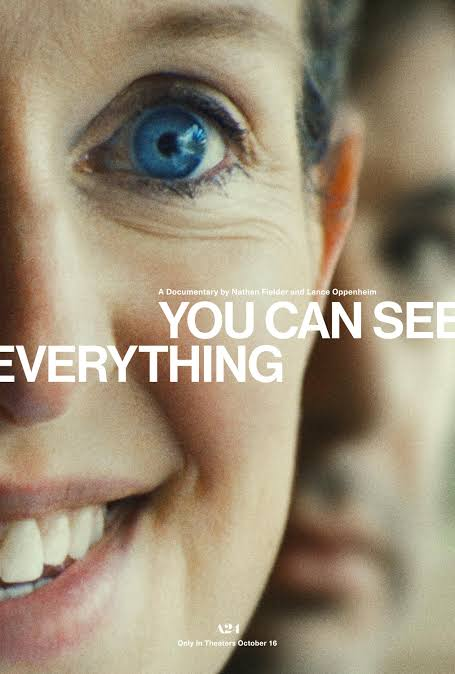
That subject, of course, was Elizabeth Holmes, and the documentary is the smash hit of the season. Truly mind-boggling that a 3-hour documentary is selling out theaters, but here we are. With all the attention You Can See Everything has garnered, it’s no surprise it’s already amassed a sizable secondary literature. After seeing the movie twice and reflecting extensively on its twists and turns (and on the theme of stage magic), I’m joining the conversation.
(While I try to avoid the biggest spoilers, this review will probably work better if you’ve seen the film already.)
The first half of the movie is organized around the question of Holmes’s guilt or innocence. The very first thing Fielder says to her is “You didn’t do anything wrong?” Holmes asserts her innocence in absolute, sometimes outrageous terms. At one point she says she has never told a lie in her entire life, and it takes quite a bit of reacting from Fielder before she walks back the statement even a tiny bit. But other than denying guilt, Holmes says very little of substance. When faced with hard questions (as when Fielder asks where things when wrong if she’s not actually guilty) she hesitates, stammers, and says she doesn’t know.
This vacuity initially doesn’t seem to afford her much trustworthiness, but it allows others to fill the void how they see fit. Her boyfriend does this a couple times during the first half, and that tendency arguably gets warped and amplified in the second half. Fielder himself more or less projects autism onto Holmes, guessing that social cluelessness might be behind her evasive answers. (I’m skeptical, but I haven’t evaluated Holmes, so who knows.) Notably, Fielder was also preoccupied with autism in season two of The Rehearsal.
As Fielder continues to spend time, and eventually live with Holmes and her family, he starts to wonder at her sincerity. And this is where the documentary makes an important but unacknowledged shift. The question “Is Elizabeth Holmes guilty?” disappears, and the directors have focused our attention on the question, “Is that thing Elizabeth Holmes said true?”
Fielder explores this latter question in some fascinating, mind-expanding, and very funny ways throughout the second half of the film. Ultimately, the documentary concludes that despite our best efforts, we are all fallible observers, and truly knowing the minds of others is beyond our grasp. Because of the switcheroo the movie pulls, saying we can’t prove Holmes is lying seems to be equivalent to saying we can’t prove that she’s guilty. When the movie ended, a woman sitting near me in the theater declared (jokingly?) “Wow, free this woman.”
But honesty and innocence aren’t the same thing! Doing a gut-check and pouring over memories of conversations (the main methods Fielder uses) are imperfect tools for determining honesty1, but they’re wholly inadequate for determining innocence. That’s why the lawyers prosecuting Holmes didn’t ask the jury to do a gut-check, they laid out documented evidence of wrong-doing. And it’s worth stating the obvious here- Holmes was found guilty.
The legal system can and does go astray. Though it seems interesting that Holmes can not summon a single detail to support her claims of innocence. And directors Fielder and Lance Oppenheim seem uninterested in doing the investigative work that could shed light on Holmes’s claims. Arguably, this ground has already been covered in other documentaries and they are more interested in doing their mentalist act about the nature of truth.
But this disinterest in the facts of the case is also somewhat infuriating. Throughout the movie, the directors show that Holmes and her boyfriend are still trying to invent (and almost certainly monetize) fantastic new medical technologies. It’s irresponsible for a high profile documentary to play fast and loose with the question of Holmes’s innocence, especially since she might be trying grift people all over again. I don’t have any doubt that people will “invest” with her in the future, and that some of them will point to this documentary to explain why they thought it was ok to give money to a notorious con artist.
- Especially when someone potentially has good reason to deceive you ↩︎
Leave a Reply